
The Garbage Ditch

police-lights-300x225

My friend David Royko, whose blog, The Chronicles of Ben, relates his family’s experience with severe autism, recently posted a story on Facebook about a man who had confronted his young son’s bully.

The story has drawn nearly 12,000 comments on the Yahoo!News site from which David pulled the story.

Not surprising, as the headline blazed, “This man pummeled an 11-year-old kid for bullying his 9-year-old autistic son.”

According to the article, the father boarded the school bus his son rode, and targeted the child his son pointed out as his persecutor.

“The father grabbed the 11-year old by the hair, pulled hard and raised the child out of his seat, then shoved him on the side of the bus where the window meets the wall,” Richmond Police Lt. Mark Gagan told CBS San Francisco.

Charged with child abuse and bodily injury to a child, Burnis Hurd remains jailed pending $50,000 bond.

While many of those commenting on this story disapproved of his tactics, most seemed to at least understand the father’s fury at his son’s tormentor.

I fall into that camp of thinking.

Of course I don’t condone adults abusing children, under any circumstances.  Few of us do.

But I understand how chronic worry, stress and fear for our children could lead to behavior we’d never deem ourselves capable of, until we’ve experienced these emotions on a daily, relentless basis.

****

Yesterday I received another email from my son’s group home director, detailing several recent escapes, or “elopements” as they are called in the adult family home business.

Apparently seeking the soda over which he’s become so obsessed, Daniel ran outside while staff’s backs were turned, entered the house next door, and helped himself to soft drinks sitting on the kitchen counter.  Close on his heels, staff shepherded Daniel quickly back home and smoothed things over with the neighboring family.

He bolted again the next day, and while staff intercepted him on the sidewalk, the neighbors this time called the police when they saw him coming.

Officers responded, conferred with the group home staff who explained Daniel’s situation, and, according to the email, “all was fine.”

The email continued, outlining another confrontation my son had that very morning with a peer at his day program, another scuffle over a cup of coffee resulting in Daniel being struck with the coffee mug.

Distressing news in itself.  But my mind was still frozen on the image of my non-verbal, autistic son, unable to explain his actions (assuming he understands them himself) when confronted by armed police and a home owner justifiably furious at a 22-year-old breaking into his home.

Consumed by a panicked restlessness, I wanted to take action, any action, to relieve my mounting hysteria at one more piece of unnerving news: fury at the neighbors who called police; at the group home staff; at my son’s insistence on behaving this way; at the ghastly twist of fate that burdened him with autism.

My first impulse was to call my son’s group home director or shoot off an enraged email demanding to know what the hell was going on, why they weren’t safeguarding my son.  But I believe they are doing the best they can with Daniel, a difficult client whose obsessions are matched only by his cunning at fulfilling them.  I needed to calm down before I responded.

“I’m going over to the police station,” I abruptly told my husband, fueled by a sudden urge to speak to the communications officer I’ve known for some years, who heads up our police department’s efforts to protect its disabled citizens through awareness and tracking programs.

“Is she expecting you?” the receptionist asked when I arrived at the station.

“No,” I replied, giving my name.

“What is this regarding?”

“Project Lifesaver,” I answered, referring the program wherein disabled residents may be equipped with a microchip, fastened to clothing or shoelaces, which can trace their whereabouts should they wander from home.  By now I’d formulated a vague plan to get some literature on the program to share with my son’s group home director, or the police department in the town in which he lives.

After making a call, the receptionist told me the officer I sought was in a meeting.  “Your best bet is to leave her a voice mail.”

“Is there anyone else I can talk to about Project Lifesaver?” I asked.

“No, I’m sorry, you’d really have to talk to her.”

“Do you have any literature on the program?” I persisted.

She shook her head with seeming regret.  “You’d really need to talk to her.”

Disappointed, I turned to go, then asked, “Can you let her know I stopped by?”

“I can’t guarantee she’d get that message,” she replied.  “It’s best to reach her by phone.”

Emotional and irrationally irked by her blithe response, I plunged recklessly forward.  “So, you don’t have, like, a message system, little cubby holes or something, where you could leave a note for her?”

She’d gotten up from her desk by this time, and came toward the bulletproof glass separating us.  “I could leave it on her desk,” she replied, as if speaking to a child.  “But I have no way of telling when she may get the message.”

Accepting I was beaten, and recognizing that it was perhaps unwise to create a scene inside a police station, I left, fighting tears of rage and helplessness as I hurried back to my car.

My husband bore the brunt of my emotional overload when I got home.

“She didn’t want to be bothered taking a message!  I mean, I completely get that she was in a meeting!  I didn’t expect her to come running out!  But the receptionist did nothing to help me when I was in obvious distress!  Aren’t they supposed to respond to citizens of the community?  What if I’d been in real trouble?  What if I was teetering on suicide?  What if I was, say, a teenager who had just given birth in her car, and wanted to talk to the one cop she knew before abandoning her baby?  Instead of leaving her baby at a Safe Haven zone, she could have ended up doing anything!  She could have left her baby in a garbage ditch!”

My husband remained calm throughout my tirade, waiting patiently until I came to a breathless halt.

“‘Garbage ditch’?”  He squinted his eyes.  “What’s a ‘garbage ditch’?”

****

Years of incidents with my son have yet to desensitize me to the often irrational fears for his welfare that haunt me every day.  With recent concerns over his new living situation, my anxiety seems to be heightening even as I tell myself I should be used to it by now, that I should live through these events with greater equanimity.

That’s not how it works, though, maybe for any parent, but certainly not for those whose children have disabilities that make them particularly vulnerable in our society.

I’m fortunate that the consequences of my tantrum yesterday were not as grave as those of the father whose rage at his son’s mistreatment landed him in jail, and a morass of legal trouble he’ll be mired in for years.

My only consequence was making a fool of myself to my husband.  And he’s seen that many times before.

The communications officer I went to see called me back that afternoon, listened to my fears and offered suggestions for talking to the police department in my son’s new town.  She’s sending me information on several monitoring programs for disabled residents that may help Daniel’s situation.

She apologized for the indifference the receptionist had shown me, which already seemed trivial in light of more pertinent concerns.  I feel silly that I reacted as I did, even as I recognize that my behavior was born of years of worry for my son.

At least it didn’t land me in a garbage ditch.

This time, anyway.
A Good Bad Hair Day

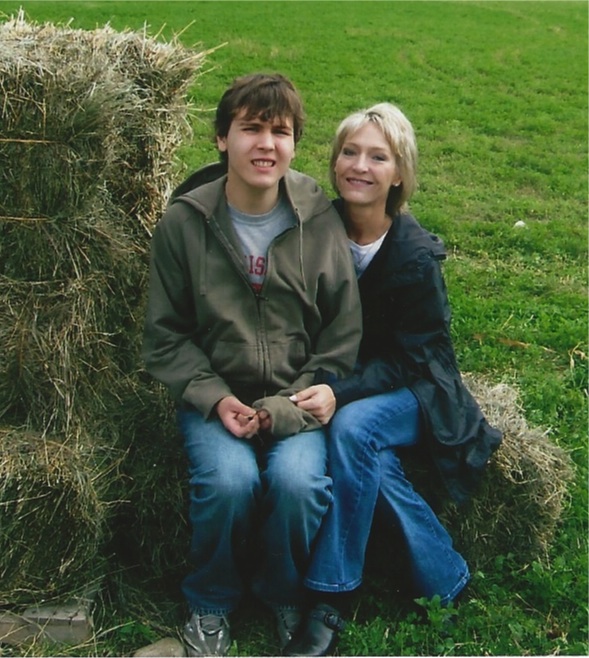
dan and me

I’d really like to stop caring about my hair.  It’s been the bane of my existence for years, rarely turning out the way I want it to except when I have nothing more exciting planned than a trip to the hardware store.

But while I do spend a tedious portion of each day with my blow dryer, I’m no longer bothered if the results aren’t perfect.  With age comes wisdom: my hair really won’t change my life, or even a moment of my day.

I wish I could adopt a similar attitude about my son’s hair.  Despite of an array of more serious concerns — aggression, bolting, beverage stealing — I still care about appearances.  His appearance, anyway.

Daniel’s disability overruled the reticence regarding children instilled in me for years by my mother.  In her view, displaying pride in her children was a recipe for losing face, an invitation to all manner of embarrassing failure she’d rather avoid until she “saw how we turned out.”  Not once do I recall her praising me to another person.

But autism granted me permission to claim one small advantage in my own child’s favor when the odds were otherwise stacked against him: He is physically attractive.

Were she still alive, my mother would be aghast.  But I say it unabashed: My son is beautiful.  He has that going for him.

His teachers adored him, cuddled him, and melted at his smile.  They loved his hip, laid-back style in the trendy clothes I chose for him.  Friends and strangers alike commented on his looks, perhaps able to summon nothing more substantive to say about a child whose eccentric behavior left them bewildered and tongue-tied.

I didn’t mind that their praise was superficial.  If Daniel’s looks gave him even the slightest edge as he faced the world, I welcomed that edge.  Playing up his physical appearance was one job I could manage successfully as the rest of our world spiraled out of control.

Letting go of that job six years ago was a loss I still experience.  We’d come to accept that residential placement would someday be necessary, but didn’t expect his escalating behavior to force that outcome when he was still a teenager, when he was still, in my heart, my little boy.

I didn’t know then how achingly I would miss the tangible care of my son, the proximity to tend to details he’d otherwise neglect, the tender, intimate routines on which we’d built our relationship together.

I miss supervising his shower, scrubbing his back as water splashed my face and clothing, reminding him to keep rinsing until his hair was clean.  I miss bundling him in a towel in the steamy bathroom, fussing over his complexion and combing his hair, trimming his nails as he sat fidgeting on the edge of his bed.

I miss washing his favorite pajamas every day so he’d never have to sleep without them, checking that his jeans weren’t too short and his dark T-shirts didn’t fade in the dryer.

I miss his shy, satisfied smile as he’d inspect his reflection in the salon mirror, brushing his fingers across his freshly trimmed hair.

I miss being close at hand, ensuring that my son is not dismissed by a world that sees only autism’s messy side-effects, making sure that he is treasured, and honored, and cared for.

And he is cared for.  Well cared for, if not to the standards I once maintained so diligently.  His adult family home is staffed by professionals who do their jobs well, taking care of my son as they are hired to do.  They seem genuinely fond of Daniel, too. Despite his quirks and alarming behavior, he still charms nearly everyone he knows.

There was just the little problem of his hair.

Months after moving to his new group home Daniel’s hair still had not been trimmed.  We offered to find a barber ourselves, but were assured by his home director that he’d take care of it.  With so many other concerns vying for attention, it was easy to let a haircut slide.

Luckily for him, Daniel has his father’s hair, a glossy, medium brown, that on a typical 22-year-old would look fashionable curling so long around his neck and across his forehead, à la Josh Groban.

But Daniel isn’t typical.  Instead of a studiously careless, tousled look, his hair was just tousled.  Disheveled.  A mess, really, even as staff tried their best to keep it at bay.

I don’t know why something so trivial came to bother me as it did.  We’ve had plenty of more pressing challenges to contend with since his transition from residential school to adult family home.

But maybe that is the answer, right there.  He is growing up, every day growing further from my care, from holding him close, tending to his needs on a regular, comforting basis.  We’ve been traveling to adulthood for years, but I’m not ready yet to let him go.

Daniel’s hair had finally been cut the last time I visited him.  It is a singularly awful haircut, his worst since my own attempts when he was three years old.

But that didn’t matter.

His caregiver couldn’t wait for me to see his new hairstyle, smiling as I cupped his face and stroked his forehead, visible again at last.

She was thrilled when I commented on his sparkling white henley, a welcome change from the worn-out, orange mesh garment that, for reasons known only to Daniel, he’s insisted for months on wearing whenever he knows I’m coming.

Eagerly she described how she’d coaxed him into wearing the new Nikes I’d bought him weeks ago, which he’d thus far refused to even try on.

She was beaming with pride at how handsome my son looked for his mother.

His haircut didn’t make a difference, after all.

But the woman caring for him did.

This Too Shall Sort of Pass

mi93

We brought Daniel to a new psychiatrist recently to consider medication changes that may improve the erratic and compulsive behavior so limiting him right now.

Taking Daniel anywhere these days is dicey, especially an untested environment like a new doctor’s office.  His group home director brought along two additional aides to assist in the event Daniel became agitated.

To our collective relief, however, he did great, sitting calmly during the consultation, and only occasionally asking me for “car.” The doctor ordered a complete blood work up before any medication decisions are made, and after visiting with Daniel for a while, I drove the hour and 40 minutes back to Illinois.

My church’s newsletter was waiting in the mailbox when I arrived home, the Focus on Health segment revealing that May is “Mental Health Awareness” month.

I thought back to our appointment a few hours earlier, when the new doctor compiled a medical, behavioral and family history of my son.

“Have you or Daniel’s father ever experienced any mental health issues, like depression, anxiety or inability to cope?” he asked.

I paused for a moment, then answered as succinctly as I could.

“Yes to all,” I replied.  “For 20 years.”

I doubt this was the response he expected, but the doctor seemed to understand me:  it is depressing, anxiety-producing and difficult to cope, acknowledging that your child’s disability, with its continual challenges and heartbreak, will be lifelong.

The newsletter article I’d begun reading quoted a faith-based mental health professional: “Faith gives me a sense of perspective and teaches me that life is full of seasons.  Whatever I’m going through is temporary and will pass.”

How often have we all heard that well-meant platitude:  This too shall pass?

But what if it doesn’t?

That question has haunted me for 20 years, since the winter morning in 1994 when a therapist told me, unsparingly, that my son would never be normal.

My faith in things “working out for the best” took a serious hit in the years following that pronouncement.  Denial protected me for a while, but eventually I conceded to the truth:  Daniel’s life, and my own, were irrevocably affected by autism.  He would never be normal.  This would not pass.

I wish I could be a person able to profess “this too shall pass” and actually mean it.  I guess it is most honest to say that I believe in the phrase in principle, and recognize that in most cases it applies.

But 20 years of “autism management” have taught me, as it has countless other parents, that even during periods of relative calm, the next challenge, or crisis, is forever lurking, out of sight but never out of mind.

The last few years have been consistently stressful where Daniel is concerned, and I recognize that my exhaustion colors my perception right now.  But the unalterable fact remains:  autism is not a difficult “phase” or period to be endured temporarily, until we get to the other side.

Especially now, during a long-running period of daily strain, it’s a hard sell to dub Daniel’s condition as simply a season of his life, which, like all difficult periods, will eventually subside.  We will never stop worrying about him, or dealing with autism’s cruel consequences.

Despite my well-honed cynicism, I finished reading the article, written by my church’s lay minister of health, a woman I’ve known and respected for 30 years.  The segment talked about resilience, defining it, in simple terms, as adapting well in the face of adversity.

And I suppose I have been resilient, although the “adapting well” part is open to debate.  It’s been painful learning to live with an uncertainty that is actually a certainty:  we don’t know what the next challenge for our son will be, but we do know that further challenges, possibly severe challenges, lie ahead.

I’ve learned to appreciate the moments, though, within the larger scope of autism, which bring relief, or comfort, or sometimes pure, unadulterated joy.

We were all anxious about Daniel’s own ability to cope with the new doctor appointment that day, fretting in advance about his reaction to a situation that could potentially result in an ugly scene.  It has happened many times before.

But that day he did beautifully.  Even when a nurse was brought in to take his blood pressure, and the staff held their breath in anticipation of a rebellious outburst.

Instead, Daniel removed his jacket when I asked him to, and without prompting held his bare arm forward, calmly allowing the nurse to wrap the pressure cuff around his bicep.  He even picked up the squeeze bulb and handed it to her, uttering his multi-purpose word, “Dauh,” to encourage her.

I was so proud of him in that moment.  It was a good moment, within a larger season of moments, that we will get through, one at a time.

Laugh at Your Own Risk

coke-262x300

People say I tell a good story.  I don’t know whether that’s true or not, but raising a child with autism certainly provides a lot of material.

The story lately concerns Daniel’s obsession with beverages: his, mine, yours — anyone’s.  Even the old lady’s at McDonald’s.

It began over a year ago with him snatching staff members’ sodas, at school and in his group home, and gulping them down as fast as possible.

Now any drink is fair game.  His beverage swiping has increased so dramatically that we can no longer take him to restaurants or even Starbucks, where, along with his lemon cake, Daniel will help himself to the coffee, latte or Frappuccino of any hapless patron in his path.

The last time I took him inside a McDonald’s was nine months ago, during a Sunday lunchtime.

We finished eating, and Daniel took our trays to the trash as usual, then suddenly bolted toward a family seated a few yards away.  Targeting the youngest child, a boy about six or seven, Daniel grabbed the cup from the kid’s hand and raised the straw to his mouth.

Horrified, I heard the boy’s father’s startled protest — “Hey, hey!” — as I struggled to retrieve the cup, which six-foot Daniel held high out of reach.  He polished the drink off in seconds.  Mission accomplished, he relinquished the cup as I grabbed him by the arm.

“I’m so sorry,” I said, turning to the stunned family behind me.  “My son is autistic, and doesn’t always behave the way I’d like him to.  I’ll get you another drink.”

The father, grasping the situation, told me not to worry, it was fine, no problem — all the kind, understanding words most people use when encountering the unusual behavior of a disabled person.

His compassion did little to soothe my own upset, though.  Dragging Daniel by the arm, I returned to the counter.  “I need another drink this size,” I told the clerk, holding up the boy’s cup and pulling two dollars from my wallet, keeping a grip on Daniel with the crook of my arm.

The clerk looked at me blankly, as though a soda had never before been ordered in the history of her McDonald’s employment.

“I need a drink this size,” I repeated urgently, holding the money across the counter.  She just stared at me with her mouth open, finally pulling a fresh cup from the stack behind her, then shaking her head when I tried to pay.  “I can’t take that,” she whispered, like I was offering her a bribe.

“Well, all right,” I replied, beyond caring whether I paid or not.  I grabbed the cup and pulled Daniel back to the victimized family.  The father tried to refuse the cup, but acquiesced when he saw my distress.  Apologizing profusely, I hustled Daniel toward the door.

But the party wasn’t over quite yet.

Nearing the exit, Daniel abruptly wrenched free, darting to a table occupied by a tiny, white-haired woman in her nineties, and what appeared to be her daughter, herself at least 75.  In a flash, he grabbed the older lady’s soda and bolted toward the bathrooms, guzzling the drink as he ran.

“He cannot be allowed to do that!” the daughter called stridently across the restaurant, over my own admonishments in Daniel’s direction.  “He cannot be allowed to do that!”

Desperate now, I called to the woman as I rushed past, “I’m sorry, he has autism — ”

“Yes, I realize that,” she called after me.  “But he cannot be allowed to get away with that!”

Neighboring customers cast wary glances our way as I snatched the now-empty cup from Daniel’s hand and turned back to his latest casualties.

“I’ll get you another drink,” I told the woman, “after I get him in the car.”  Before she could respond I dragged Daniel out the door and into the backseat of my Jeep, rebuking him incoherently across the parking lot.  “You stay right here, do you understand me?”  I hit the lock on my key fob and ran back inside.

Still clutching the original two dollars, I approached the women’s table, where the daughter had, apparently, undergone a change of heart.

“It’s ok,” she said indulgently, waving off the money I offered.  “It’s ok.  It’s ok.”

But I’d passed my stress threshold by then.

“It’s not ok!” I cried, verging on hysteria.  I tossed the money on the table in front of her.  “It’s not ok!  It’s never going to be ok, so please, stop saying that word!”

*****

Telling the story in the weeks to come, I was able to laugh along with my audience at the whole preposterous scenario.  It was a relief to laugh about it, after the fact.

But that incident underscored how parenting this child, how living for years through these events, has shaped my attitude and behavior, just as autism shapes Daniel’s.

I was telling a family member about my ordeal a few days after it happened, still shaken, mourning my son’s ever-shrinking world, and the disability that had robbed us of sharing even a meal together at McDonald’s.

She was already chuckling as I reached the epilogue: driving from the restaurant, disgraced; me sobbing in hopeless futility while Daniel, already focused on his next request, asked repeatedly for Starbucks.  I’m ashamed to admit how I screamed at him, again and again, as we drove back to his group home, another visit ruined by this hideous, inscrutable disorder, and my dismal collapse under its strain.

“It’s actually not that funny,” I said, annoyed by her failure to see the larger, more devastating picture.  “This is a pretty big problem for us right now.”

“Well, I’m sorry, Kristen,” she told me, giggling.  “But I just have to laugh at that one.”

I said nothing more.  But that family member topped my shit list for months to come.

And that is my problem.

All my friends in the special-needs community have experienced these episodes, multiple times, surviving them only by recognizing and rolling with their absurdity.  Better to laugh than to cry, right?

There are times when I can’t laugh, though, when the ramifications of Daniel’s behaviors outweigh their hilarity, when idiosyncrasies we once found quaint now impinge so dramatically on his chance to live even the semblance of a normal life.

But is it reasonable to expect those who aren’t living this to truly understand, to intuit the difference between a “funny” ordeal, and that one, final episode that breaks me?  Do I have the right to dictate their reactions, when they are patient enough to listen at all, to commiserate with the difficult parts of my life that have no real bearing on their own?

This is my worry to struggle through, as best I can, while the rest of the world struggles through their own.  Months of resentment later, I recognize that it is my problem, my failing, to ask those around me to view my experience through a lens that is mine alone.

I suppose it is better just to laugh.

But only when I say so.


Sad but True

Daniel44

An editor once told me that an essay I’d written was just too sad to be inspirational.

I hadn’t really been aiming to inspire, but simply tell the truth as I knew it.  And sometimes the truth is, undeniably, sad.

The truth hit me full in the face today when I got an email from my son’s group home director.  I knew a message like it would come eventually, but still was not prepared for it.

It’s been three months since Daniel moved to his new home in Wisconsin, after aging out of the residential school he attended for six years. It wasn’t easy to find this new home, for a variety of reasons, foremost being Daniel’s behavioral history, which includes aggression and biting.  Finding qualified facilities for people like my son is challenging, to say the least.

Most of the time Daniel is easy going, engaged, blowing his bubbles or working a sticker book, enjoying the DVDs he knows by heart.  He laughs often, loves music and riding in the car.  He has adjusted well to his new home, and is usually compliant and easily occupied.

But he can also turn inexplicably aggressive, and sometimes violent.  While infrequent, his outbursts are sudden, rage-full, threatening.  He’ll lash out, actively seeking to hurt the people caring for him or getting in the way of what he wants.  He is capable of becoming a person almost unrecognizable from the bright and beautiful young man I love so deeply.

It is incredibly sad to type these words about my son, and know that they are true.

Two weeks ago Daniel began attending a day program for disabled adults four mornings a week.  We knew instituting this new regimen wouldn’t be simple, as, like many autistic persons, Daniel does not typically embrace changes in routine.  Nevertheless, we were anxious for him to begin structured, purposeful activity, however modest, rather than spend day after day within the walls of his group home.

The email I received today detailed two incidents which occurred at the new program in the last few days.  In the first, Daniel grabbed a pot of coffee and splashed the hot liquid across his legs while trying to gulp some down before it was taken from him. The next day he became agitated, without apparent cause, and lunged at his caregiver, then bit the peer who tried to intervene, breaking the skin and necessitating an obligatory trip to the hospital.

Caregiver, peer and Daniel are fine, I’m told, and the group home manager remains confident that Daniel will adjust to the day program with time.

But it is incredibly sad that after 20 years I still don’t understand why my son behaves the way he does, and I am still so powerless to help him.

For three months friends have asked me how Daniel is doing, how the move has worked out.  I want so much to tell them that it’s great, it’s beautiful, a perfect fit after such a long and difficult search.  I feel almost obligated to provide a positive report to these caring people: that after all the turmoil they’ve borne witness to, our efforts finally paid off, and I can offer a happy ending in repayment for their support.  Perhaps, too, by saying it to them I can convince myself that it’s true.  But I know by now that the truth is more complicated than that.

How could I tell my friends that it’s working well, that everything is fine, when I knew the day would come when it wouldn’t be fine, that the honeymoon would be over; and the next time they ask I’ll sense their letdown, their confusion at my dispirited, uncertain answer, which may be the only true answer I can give?  Because Daniel’s insidious, baffling behaviors moved to his new home with him.

I don’t want to tell my friends that I’ve been waiting for the other shoe to drop, dreading the call or email detailing a set-back, further limiting his options, his chance to lead a productive, meaningful life.  I can’t admit my fear that perhaps we made a mistake, that maybe we didn’t pick the right place after all, even as I know our options were so limited as to make “picking” the right place practically moot.  I don’t want to confess how scared I am that he’ll never come around, never grow out of these behaviors which so restrict his potential, his future, his relationship to us and the rest of the world.

I don’t know how to tell them how unbearably sad it is to know that he is miserable when he lashes out, and I live too far away to comfort him; that this can’t possibly be what God intended for my son, and yet it is happening, it happens again and again and we don’t know why or how to stop it.

When I visit him now our outings are dictated by his unpredictability, the bleak certainty that I can no longer control this six-foot man-child, if he becomes without warning a person frightening even to me.  We are confined to drives in the safety of my Jeep, roaming the streets of a town I don’t know, a world away from all I once dreamed for him.

And how can I express, in the wake of his abhorrent behavior, that I share moments with my son that make up for it all, that remind me of who he really is, that there is more to him than the aggression, which in its enormity eclipses the loving and sensitive young man I know him to be?

Will it mean anything to those who have witnessed his rage if I recount the moments when he is joyful and laughing, rocking back and forth in his seat as we drive, windows down and air blowing clean across our faces, listening to a Red Hot Chili Peppers song again and again, volume cranked high?  Would anyone believe that he understands me when I tell him, “Here it comes, Daniel!”, that he laughs then, as the bass solo pulses through our bodies, washing away for a few blessed moments the anguish that autism, in its awful duplicity, has inflicted, and I have Daniel again, my real Daniel, my true and beautiful son?

Because that is the truth, as well.  And I hold that truth against my heart, when it is breaking.